
Grapevines
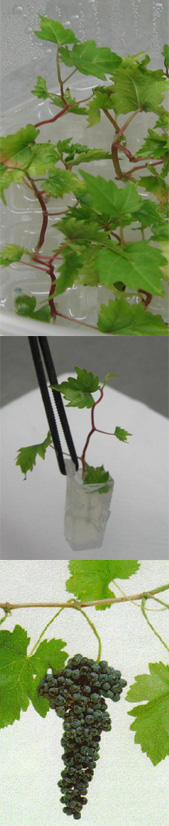
Grapes are the world’s most important fruit. World grapevine plantings exceed 5 million ha with nearly 9 billion grapevine plants. Overall plantings are relatively static, but there is considerable “churn” due to localised “fashion” demand for particular varieties, changing land pressures, disease losses, and climate change, etc. Historically this corresponds to approximately 150 million plants per annum in established grape-growing countries. In New Zealand and Australia recent demand has been for approximately 3 million and 12 million new grapevine plants annually; the major markets are Europe (55 million), China (30 million), USA (20 million), Argentina (14 million), Chile (13 million) and Turkey (10 million). About 71% of grape production is for wine grapes, 27% fresh fruit, and 2% dried fruit.
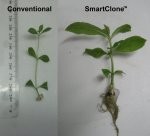
All are clonally propagated by cutting and grafting methods. Disease transmission is a serious issue for vineyards, with tissue-culture providing an important means for propagating virus-free lines. All varieties of grapes tested have been successful in the SmartClone™ system.
Grapevine varieties available
|
|
Purpose |
Variety |
Clone |
|
1 |
White wine |
Chardonnay |
G9VT |
|
2 |
White wine |
Chardonnay |
FV110V5 |
|
3 |
White wine |
Sauvignon Blanc |
H5V10 |
|
4 |
White wine |
Viognier |
642 |
|
5 |
Dessert wine |
Muscat Gordo |
J2 |
|
6 |
Red wine |
Cabernet Sauvignon |
Unspecified |
|
7 |
Drying |
Sultana |
H5 |
|
8 |
Table |
Red Globe |
10-23D |
|
9 |
Table |
Autumn Royal |
FPS01 |
|
10 |
Rootstock |
Dog Ridge |
A6V8 |
|
11 |
Rootstock |
1103 Paulsen |
200HT |
SmartClone™ - Tougher plantlets faster
SmartClone™ changes the tissue culture paradigm. NuPlant’s key technology allows conditions to be customized for each growth phase for more robust plantlets, grading for uniformity, robotic handling for laboratory efficiency, easy soil transfer, and a head start for accelerated nursery growth.